No Plus-Ones: Staging a Rough-Cut Screening for People Who Don't Know You

There’s a specific kind of silence that follows a rough cut when the audience is made up of your friends. It’s not hostile. It’s not even neutral. It’s the silence of people who want you to feel good and are quietly editing their faces to make sure you do. They laugh a beat early at the inside joke. They nod through the scene that confuses them because they already know what you meant. They tell you it’s “coming together.” That’s not feedback. That’s a hug with a runtime.
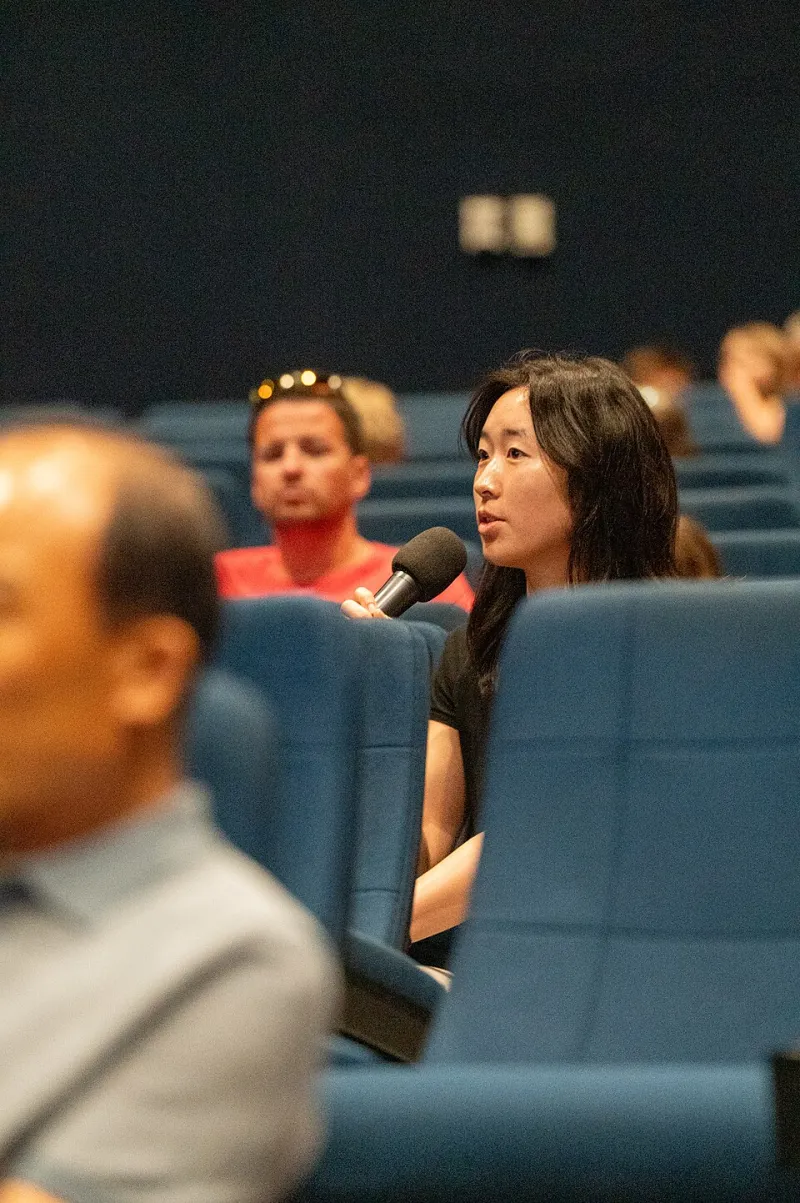
If you’re aiming at 2026 festivals, you need a colder instrument. You need strangers — people who don’t know your name, didn’t read your treatment, and have no reason to protect your feelings. Honest stranger feedback is the cheapest post-production tool an indie filmmaker can use. No rental house required. No color suite. Just a folding chair, a clipboard, and a room full of people who owe you nothing.
Why supporters are a bad instrument
Your friends are a support system, not a test audience. They know too much. They fill gaps you didn’t actually close. They recognize the location from your Instagram and the actor from your day job. When they say “I got it,” what they often mean is “I got you.”
That’s not cruelty on their part. It’s context. A stranger has to read the film as a film. They don’t know that the diner scene was shot in one afternoon or that the lead’s silence is supposed to be grief. They only know what the cut gives them. That’s exactly the audience a festival programmer becomes — tired, curious, and unwilling to do homework.
Casting the room: who counts as a stranger
You don’t need a fancy recruitment pipeline. You need eight to fifteen people who watch movies and don’t know you personally. Try a local film meetup, a library bulletin board, a college radio station, a neighborhood newsletter, or a coffee shop that already hosts strange little events. Post a plain notice: “Rough-cut screening of an indie short. Free coffee. Honest reactions wanted. No filmmakers required.”
Screen lightly. You want people who can sit through a 90-minute cut without treating it like a networking event. You don’t need only filmmakers — in fact, a room of only filmmakers can turn into a notes competition. Mix in regular moviegoers. One trusted collaborator can sit in the back and take notes. Nobody else gets a plus-one. No parents, no partners, no pals from set. If someone says “my friend is visiting,” the answer is a warm no.
Set the room like a screening, not a party
Use a library meeting room, a church basement, a microcinema, or any space where the sound works and the chairs face one direction. Start on time. Keep the intro short. Say: “This is a rough cut. We’re testing the film, not you. If you get lost, that’s useful. If you’re bored, that’s useful too. We’ll hand you a card after.” Then get out of the way.
Don’t hover by the projector. Don’t watch faces for approval. Sit in the back and take the temperature of the room. Snacks can wait until after the screening. A room chewing chips is not a room listening.
The one-page response card
Keep it short enough that people actually fill it out. Ask for answers, not ratings. A five-star scale tells you almost nothing; a sentence tells you where the story broke.
A good card might ask: What did you think was happening in the first ten minutes? Where did you get lost? Which character did you trust most, and why? When did your attention drift? What’s one thing you’d cut? What’s one thing you’d keep? Leave space for a final note. No names required.
Collect the cards before the discussion starts. Otherwise the loudest person in the room writes the group’s answers for them. You want private reactions first, then conversation.
Run the notes session like a focus group with manners
After the screening, give people twenty minutes to talk. Ask open questions. “Where did your attention drift?” “What did you expect to happen next?” “Was there a moment you stopped believing the character?” Don’t defend the cut. Don’t explain the scene you already know is confusing. Write the timecode and the note on a whiteboard. Have someone else take fuller notes so you can listen.
If the conversation turns into fixes, put them in a parking lot. You’re collecting evidence tonight, not editing. And please don’t ask “Did you like it?” That question invites polite noise. Ask where they leaned in and where they checked out instead.
Separate story problems from polite noise
The next morning, spread the cards on a table. Look for patterns, not one-offs. If three strangers say the second act sags around the same minute, that’s data. If one person mentions the color grade, that’s taste. If someone says “I loved it” and nothing else, thank them and move on. Compliments are not notes.
Polite noise sounds like “It was good” or “I didn’t get the ending” with no follow-up. Story problems sound like “I thought she was angry at her brother, not her boss” or “I couldn’t tell if that was a flashback.” Boring is a symptom. Ask where. Confusion is a clue. Ask when. Your job is to find the repeated word, the repeated timecode, the repeated question mark.
Make three columns: keep, fix, investigate. Pick two or three changes. Not fifteen. Then cut, test again if you can, and save the cards. They’re cheaper than a post-mortem and more honest than a group chat.
The cheapest post tool is a folding chair and a clipboard. Book the room. Hand out the cards. Let the strangers tell you what you actually made.