Taproom, Bookshop, Garden Plot: Booking Nontraditional Venues for Your 2026 Indie Screening
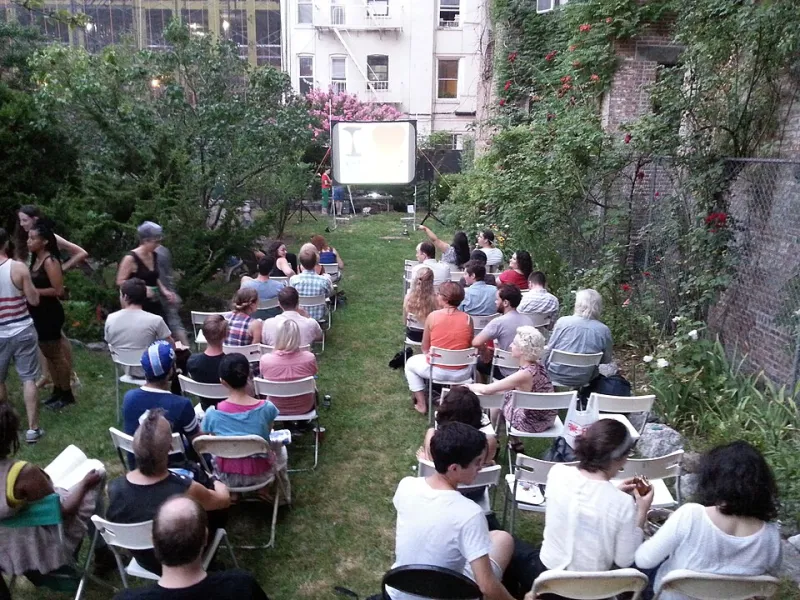
Photo: The Museum of Reclaimed Urban Space, CC BY-SA 4.0, via Wikimedia Commons
A four-wall theater wants a print, a deposit, and a date six months out. A brewery wants to know if you can be finished by 9:30 so the late crowd can get in. One of those conversations is a lot easier to win — and in 2026, the second one is where most micro-budget films actually find their first real audiences.
Breweries, independent bookstores, and community gardens are already in the business of gathering people. They have chairs, they have a following, and they have empty Tuesday nights. What they don't have is anyone who knows how to put a film on a wall.
Walk the room before you pitch it
Before you send a single email, show up as a customer. Sit where the audience would sit. Look at the windows at 7 p.m. in July, then imagine them at 8 p.m. in November. Count the outlets. Listen to the room tone when it's half full — because that is roughly the noise floor your dialogue has to survive.
Most first-time venue screenings fail on ambient light and intelligibility, not on attendance. Solve both before you ask for a date.
Three rooms, three very different crowds
The taproom
Expect a loose, late-arriving crowd in the 25–45 range, ordering in rounds and talking through the first ten minutes. Plan for it: open with a short, loud, visually punchy piece, do a quick welcome from the host, then settle into the feature. Anything under 100 minutes plays best. Before you commit, ask the venue how their liquor license treats a ticketed event — some breweries can host a free screening with a suggested donation but can't sell admission, and that detail reshapes your whole plan.
The independent bookstore
Smaller, quieter, and far more likely to stay for the Q&A. Capacity usually lands between 30 and 60 folding chairs. This is the right room for documentaries, essayistic work, and anything with a literary spine — and the events coordinator is usually the single most helpful person in the building. Hard floors and tall shelves bounce sound, so keep the volume modest and the speaker aimed at bodies, not walls.
The community garden
Seasonal, family-heavy, and done by dusk. In most of the country that means April through October, which is exactly why you should be booking now for spring 2026. Board-run gardens may need a vote at a monthly meeting, so start eight to ten weeks out. Get a rain date in writing on day one. Shorts, animation, and environmental docs land hardest here.
Projection and sound: the checklist nobody enjoys
- Lumens beat specs on paper. A 3,000-lumen projector is fine in a dark bookstore and useless in a glass-fronted taproom at golden hour. Ask about blackout curtains, and budget for renting them.
- Measure throw distance. Bring a tape. Screen size is determined by the room, not by what you own.
- Pack your own screen. A fast-fold 16:9 portable screen costs less than a single festival submission fee and instantly makes the night feel intentional.
- Sound is the whole ballgame. A single powered speaker on a stand, placed at head height, beats a laptop's built-in speakers by a mile. Bring a long 3.5mm-to-XLR cable, a spare, and gaffer tape.
- Turn on captions. Always. Brewery acoustics are unforgiving, and captions are accessibility, not a fallback.
- Do a full tech run at the actual hour. A 2 p.m. test tells you nothing about 8 p.m.
Splitting the take without making it weird
Keep it simple and put it in one paragraph of email. Common structures that work:
- Door split, 70/30. You take 70 percent of ticket revenue, the venue takes 30. Bar and food revenue stays entirely with them — say that out loud, because it's the sentence that gets you a yes.
- Suggested donation. No ticket price, a donation jar, and a split of what comes in. Lower friction, lower ceiling, great for gardens and bookstores.
- Flat venue fee. You pay $100–$250 for the room and keep the door. Only do this once you have a proven local draw.
Never ask the venue to cover equipment. Bring the projector, the screen, the speaker, the cables, and the extension cords. Arrive with the whole kit and they'll invite you back.
The pitch email: make it their night, not your rental
Hi [name] — I'm a filmmaker based in [city] and I've been in your taproom maybe a dozen times, usually on Thursdays. I have a 78-minute feature and I'd like to build a Tuesday night around your room rather than around my film.
Here's what I'd bring: the projector, the screen, the sound, all the promotion, and an audience. Here's what I'd need: about three hours, a wall, and permission to use your back room on a night you'd otherwise be quiet.
You'd keep every dollar from the bar. We'd split the door 70/30 in my favor, and if the room isn't full, I'll comp your staff in so nobody's sitting in an empty room. I can send a one-page run of show and a poster mockup with your logo on top.
Would a 15-minute walkthrough sometime next week be useful?
Notice what's missing: the phrase "rent your space," a synopsis longer than two sentences, and any suggestion that they're doing you a favor.
The follow-through that gets you invited back
Send the run of show a week ahead. Confirm load-in two days out. Brief the staff on where the light switches are. Put the venue's name above yours on the poster. Photograph the room full, tag them, and send a thank-you note the next morning with the attendance number in it.
Then, three weeks later, ask about a second date. Nontraditional venues rarely say no twice to a night that filled their room.