Five Questions, One Object, One Rule: Building a Post-Screening Q&A That Outlives the Night
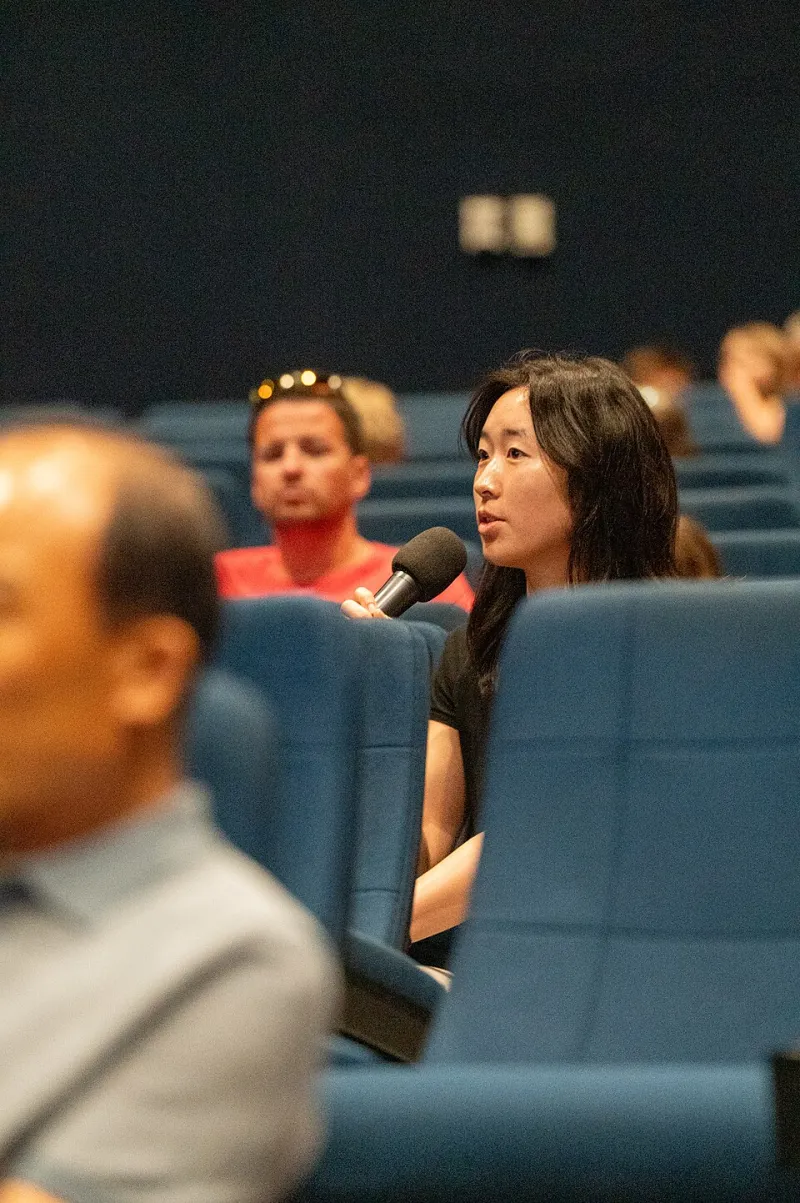
Photo: U.S. Army photo by Pfc. Seu Chan, Public domain, via Wikimedia Commons
The credits roll. The lights come halfway up. A volunteer hands you a microphone that has clearly been dropped before, and forty people in folding chairs look at you with the particular patience of an audience that just watched something and isn't sure yet how they feel.
This is not an afterthought. This is the second release of your movie.
The first release happens on the screen, and you control it down to the frame. The second one happens in the room, and you control almost none of it — which is exactly why it deserves preparation. A good conversation can make a polite audience into people who bring a friend to the next screening three towns over. A bad one can flatten a film that was working fine ten minutes earlier.
The room is part of the projection
Watch what happens to a crowd during a Q&A. If the first question is thoughtful, posture changes. If it's a logistical question — "how long did it take?" — the room deflates. If the director answers in paragraphs that never land, people start checking the exit signs.
The conversation is the last thing they'll remember, and it's the thing they'll repeat to someone else. Give them something repeatable.
Prepare five questions, not a script
A moderator with a printed list of forty questions is a moderator who will read all forty. Five is the number. Five gives you places to go and nowhere to hide. Hand them over in advance, and pick ones that open doors rather than close them:
- The question you wish someone had asked. Something about process, obsession, or the choice that looked strange on paper.
- The craft question. One specific decision — the sound of the room, the color of a coat, the decision to shoot a scene in a single take — that teaches the audience how to watch.
- The why-here question. Why this film, this town, this venue, these people in these chairs tonight.
- The failure question. What didn't work, what got cut, what you'd shoot differently. Audiences trust a director who can name a wreck.
- The forward question. What's next, where it plays next, how people can bring it to their own town. Ask it last, on purpose.
Rehearse none of the answers. Rehearse the questions so you don't hear them for the first time in front of a crowd.
Bring one physical object
The single best thing you can carry to a screening is not a poster. It's a small, unglamorous object from the making of the film: a prop that survived, a page of the first draft with the good line crossed out, a location photo with the crew's shadows in the frame, a call sheet with somebody's coffee ring on it.
Hold it up. Pass it around if the room is small enough. It converts an abstract thing — a movie — into a fact that people can hold. And it gives the room something to ask about, which is worth more than any icebreaker.
The spoiler-safe prompt
Here's the rule I'd tattoo on every moderator's forearm: never let the first question be about the ending.
Hand out index cards at the door and invite people to write questions rather than shout them. Anonymity produces better questions and spares the shy. On the card, print one line: Ask about anything except the last ten minutes — we'll get there if we get there.
That prompt does two things. It protects the people who haven't seen the film and might see it next week in another city, and it signals that this conversation has a shape. If the ending does come up, park it, flag it as a spoiler, and let the room decide whether to go there.
The moderator is a thermostat
A moderator isn't there to perform. They're there to regulate temperature. When an answer runs long, they cut in warmly. When someone in the back is dominating, they redirect with a name. When the room goes quiet, they use one of the five questions instead of panicking.
Brief them for five minutes beforehand. Tell them exactly one thing you don't want to be asked. Give them permission to interrupt you.
Record it like it's the actual shoot
Bring two mics if you can — one for you, one for the moderator or the audience — into a small recorder or a phone with an adapter. Set the phone to airplane mode. Lay down thirty seconds of room tone before anyone speaks. Put a sign at the door saying the conversation is being recorded, and announce it once from the mic. If a venue asks for a release, sign it; if a guest asks not to be recorded, respect it without negotiating.
Get someone to run a second device as backup. The Q&A is the one part of the night you cannot reshoot.
Editing the room into three assets
A single conversation should produce at least three things you'll actually use:
A 45-second quote clip with burned-in captions. Choose the answer where the room visibly reacts, not the one where you sound cleverest. Post it as a festival update while the event is still in people's feeds.
An eight-to-ten minute podcast segment. Pull two or three of the best exchanges, add a short intro recorded the next morning, and you have an episode. Strip the audience laughter if it's distracting; keep it if it isn't.
Press-kit pull quotes. Three lines, transcribed cleanly, with the venue and date attached. Programmers read these. They're a fast way to show a film that generates conversation rather than polite silence.
What the recording is really for
Six months from now, when you're emailing a library, a brewery back room, or a microcinema two states over, "here's a link to a Q&A where the audience wouldn't let the director leave" is a better argument than any synopsis. It's proof of an evening that already happened and can happen again.
That's the whole case for treating the Q&A as part of the movie. The film ends when the credits do. The conversation is what carries it out the door.