Don't Send a PDF to a Film Festival: The EPK Cut That Gets Watched

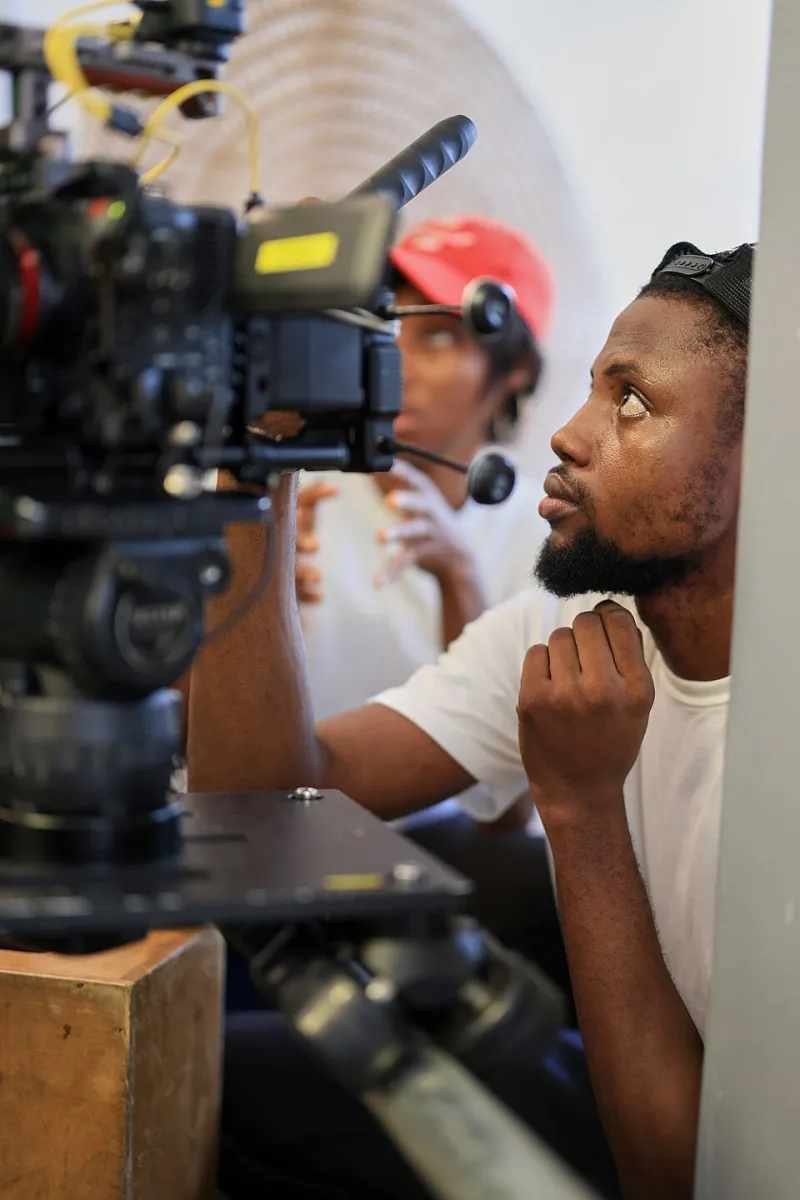
Photo: filmmaker editing electronic press kit on laptop with film stills and timeline, warm desk light, over-the-shoulder, via testpros.com
A programmer opens your EPK at 11:47 p.m. on a Tuesday. They have forty-seven more tabs, a half-finished coffee, and roughly ninety seconds of patience before the next thing loads. If your press kit opens with a logo, a twelve-page bio, and a folder of unlabeled stills, you have already lost the room. Not because your film is weak — because your kit is asking them to work.
At Ziggy Films, we have watched enough submission links die in the dark to know the fix is not more information. It is better sequencing. Your electronic press kit is not a filing cabinet. It is a short film about your film, and it deserves the same rhythm, clarity, and ruthless editing you would bring to a trailer.
Start With the 90-Second Handshake
The top of your EPK should be a 90-second sizzle — not a full trailer, not a scene, not a montage set to the one song you could afford. Think of it as a handshake that tells a programmer what the film feels like, who it happens to, and why it might belong on their screen. Open on a face or a place, not a production company card. Get to a turn by second thirty. Land on an image that lingers, not a title card that explains.
Keep it embeddable. In 2026, most submission portals and festival inboxes still prefer a clean link over an attachment. Host the sizzle on a page that loads fast, plays without a login wall, and includes captions. A programmer watching on a laptop in a hotel room at midnight will not fight your Vimeo password. Make the first frame legible at thumbnail size, and make sure the audio does not clip when played through laptop speakers.
The sizzle is not there to summarize the plot. It is there to create trust. A programmer should finish it thinking, “I know what this is, and I want to see the whole thing.” That is a different job than selling tickets to a general audience.
Three Stills, Not Thirty
A still is not a screenshot. It is a decision. Choose three images that do three different jobs: one face, one world, one moment. The face gives a programmer someone to follow. The world shows the production value and the texture of the film. The moment — a gesture, a glance, a bit of staging — hints at the tone without giving away the ending. Label every file with the film title, the scene or subject, and the photographer’s credit. “IMG_4471” is not a press asset; it is a scavenger hunt.
Deliver horizontal and vertical crops. A festival program guide, a social post, and a venue slide deck all want different shapes. If you only supply one aspect ratio, you are quietly asking a volunteer designer to crop your film’s best image at 1 a.m. They will not do it well. They may not do it at all.
The Director Statement Needs a Pulse
Most director statements read like grant applications written by committee. Yours should sound like a person. Keep it between 150 and 250 words. Start with the concrete thing that made you write the script — a sound, a room, a newspaper clipping, a family habit. Then name the risk. What did you have to figure out on set? What did you protect in the edit? End with the question the film is actually asking, not the theme you hope a critic will find.
Write in first person. Use plain sentences. If you have a production story that reveals character — the location that fell through, the actor who rewrote a scene in the parking lot — include one. One. The statement is not a diary; it is a handshake with context. A programmer should finish it knowing why this film needed to be made by you, not just why it was made.
One Page, Every Answer
Your fact sheet is the part of the EPK that saves everyone time. Keep it to one page, and answer the questions a venue or journalist will ask before they ask them. Title. Runtime. Format and frame rate. Completion status. Premiere status. Credits for director, producer, writer, cast, and key crew. Contact email and phone. Screening history, if any. Content notes. Technical requirements for projection. And a short line about available formats — DCP, ProRes, or whatever you can actually deliver without a panicked phone call.
Put the fact sheet in the body of the email or on the same page as the sizzle, not buried in a downloadable zip. If you have press quotes, keep them short and attributed. If you do not have press quotes, do not invent a section for them. A clean kit with less information is stronger than a padded kit with broken links.
Build for the Forward
Programmers forward EPKs to other programmers. They paste links into spreadsheets, drop stills into slide decks, and send your director statement to a print deadline. Design for that chain. Use a simple page structure: sizzle at the top, three stills with credits, director statement, fact sheet, contact. Name your files clearly. Test every link on a phone. Check that the page works without an account. If your kit requires a password, include it in the first line of the email — and make sure it still works next week.
A good EPK does not need to be expensive. It needs to be cut. The same discipline that makes a micro-budget trailer survive its first twelve seconds applies here: get to the human thing fast, earn the next click, and leave the programmer with a clean path to say yes. Your press kit is not paperwork. It is the first screening of your film for an audience of one.