The Second Script: Recording an Audio Description Track With a Borrowed Mic and a Neighbor Who Does Voice Work
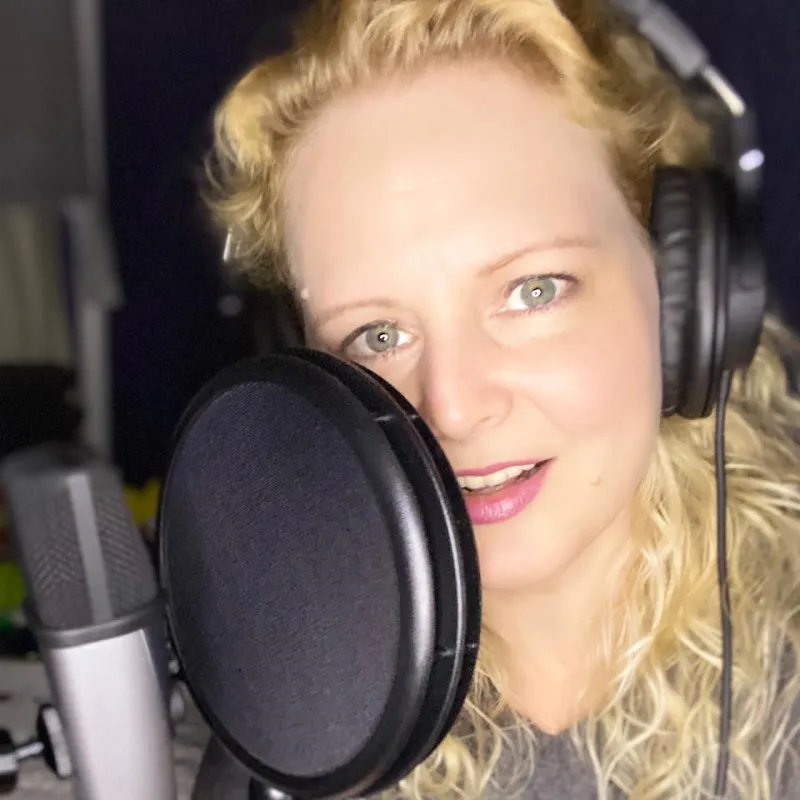
Photo: CaptainChaosDunDunDun, CC BY-SA 4.0, via Wikimedia Commons
The question came from the third row, about forty seconds after the credits rolled: "Was there description on that?" There wasn't. We had burned-in captions, a decent lobby, and a projector that behaved. What we didn't have was anyone telling the room what the picture was doing during the long stretches with no dialogue — the eleven-second shot of a kitchen window, the handoff of a letter we never see opened.
That was the night the second script got written. Audio description isn't a caption with a voice bolted on. It's a separate pass through your own film, made of the things sighted viewers absorb for free. Below is the version of the process that fit our budget, which is to say: almost nothing.
Start With the Gaps, Not the Plot
The instinct is to describe everything. Fight it. Pull up your timeline and mark every stretch longer than about three seconds where nobody is speaking — those silences are your real estate, and they're smaller than you think.
Our short ran fourteen minutes and change. The full description script came out to roughly 1,400 words, which sounds like a lot until you realize how little of it survives the edit. At a comfortable pace, you get maybe two words per second of silence, and you should aim for a little under that. Overstuff a gap and the narrator starts stepping on your own dialogue, which is the fastest way to make a track feel like an interruption instead of an invitation.
A few rules we borrowed from people who do this for a living:
- Present tense, third person. "Maya sets the box on the counter," not "Maya would then set the box down."
- Name a character the first time you describe them, then use the name. Don't repeat hair color every scene.
- Say what matters to the story, not what's merely visible. The brand on the cereal box is not the point; the fact that it's the same box from the opening scene is.
- Narrate on screen, not ahead of it. If a door opens in four seconds, don't say it opened four seconds early.
- Skip the camera. "The camera pushes in" pulls people out of the film. "He reads the letter again" keeps them in.
Read your draft out loud with a stopwatch. It will be too long. Cut adjectives first, then subordinate clauses, then your favorite line.
Write It Like a Scene, Because It Is One
The creative part nobody warns you about: description has a voice, and that voice should match the film. A deadpan comedy short does not want a documentary narrator. Our film is quiet and a little sad, so the script stayed plain — short sentences, few metaphors. We tried one lyrical passage about the light in the hallway. It sounded like a poetry reading interrupting a movie. Out it went.
One useful trick: describe your film to a friend over the phone in one minute, record that, and transcribe it. The way you naturally phrase things is usually the register your description track wants to live in.
Cast Locally, Record Cheap
The narrator was a neighbor who does community theater and had never heard of audio description. That turned out to be fine, maybe ideal — she read the script cold, asked two clarifying questions, and had a natural rhythm that a professional read might have sanded off.
We recorded in her dining room, which has a bookshelf on three walls and, as it happens, decent acoustics. The mic was a loaner from a friend who podcasts: a USB condenser on a desk stand, pointed at her from about eight inches, slightly off-axis so the plosives didn't pop. We hung a moving blanket behind her. Total equipment cost: zero dollars and one batch of cookies.
For software, Audacity did everything we needed — it's free, it records at 48 kHz, and it will happily export a clean WAV. Record in passes by scene rather than trying to nail fourteen minutes in one take. Keep a scratch copy of the film playing on a laptop with headphones so the actor can hear the silences she's filling.
A few housekeeping notes that saved us a redo:
- Record a slate at the top of every file. Say the scene number and clap. It makes syncing trivial.
- Aim for peaks around −12 dB, with plenty of headroom. You can always bring it up later; you can't un-clip it.
- Get two full takes of each section and one alt of the trickiest lines.
- Keep the raw takes. You will want to re-cut a sentence at 11 p.m. two days before the screening.
Deliver Two Files, Not One
Here's the part that trips up micro-budget filmmakers at festivals: most small festivals cannot play a separate description track. They're running a single stereo feed into a room, sometimes off a laptop, sometimes off a DCP someone else mastered.
So we packaged two things. First, the standalone track: a 48 kHz WAV, named clearly, with a short silent leader. Second, an "AD mix" — the same track folded under the film's existing stereo mix at a level where both are intelligible, exported as a single file that any venue can play without touching a routing menu.
Name the files so a volunteer programmer can find them at 9 a.m. on a Saturday: YourFilmTitle_AD-standalone_2026.wav and YourFilmTitle_AD-mixed_2026.wav. Put a one-line note in your submission materials — not buried in the EPK, in the actual email — saying both exist and which one is the default. You are not asking for a favor. You are handing someone a file that works.
Test It in a Room With Bad Chairs
The library branch agreed to a Saturday afternoon slot, and we ran the AD mix through the house speakers rather than headphones — the harder, more honest test. Two people from a local low-vision group came, which we arranged through a state commission email that took ten minutes to write.
What we learned: the first thirty seconds were too dense, the narrator's name-drops landed before the visuals did in two places, and one stretch of near-silence we'd left completely bare needed a single sentence to hold the scene together. None of that showed up on a laptop screen.
Hand out index cards afterward. Ask two questions: where did you lose the thread, and where did the voice get in the way. The answers will be specific and occasionally blunt, and they will make the track better than another week of editing in a quiet room ever could.
Accessibility here isn't a checkbox on a festival form. It's another pass at your own story, told to someone who's listening instead of looking — and honestly, it's the closest you'll get to watching your film for the first time again.