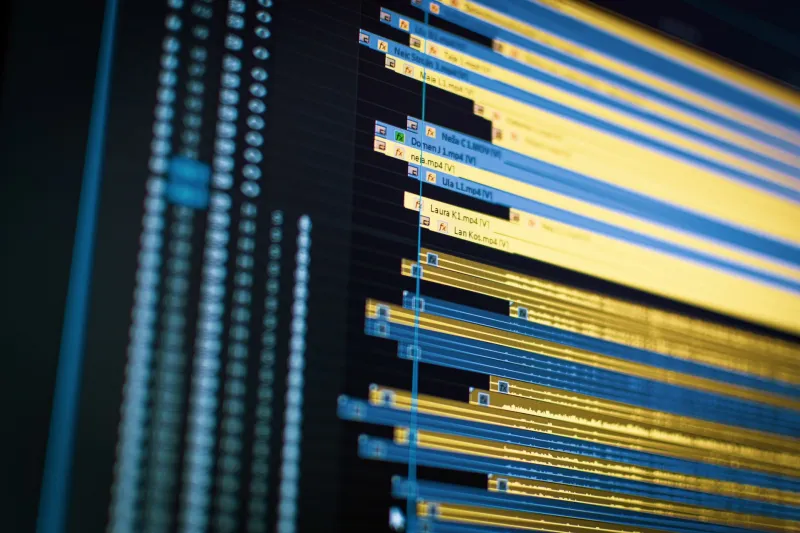
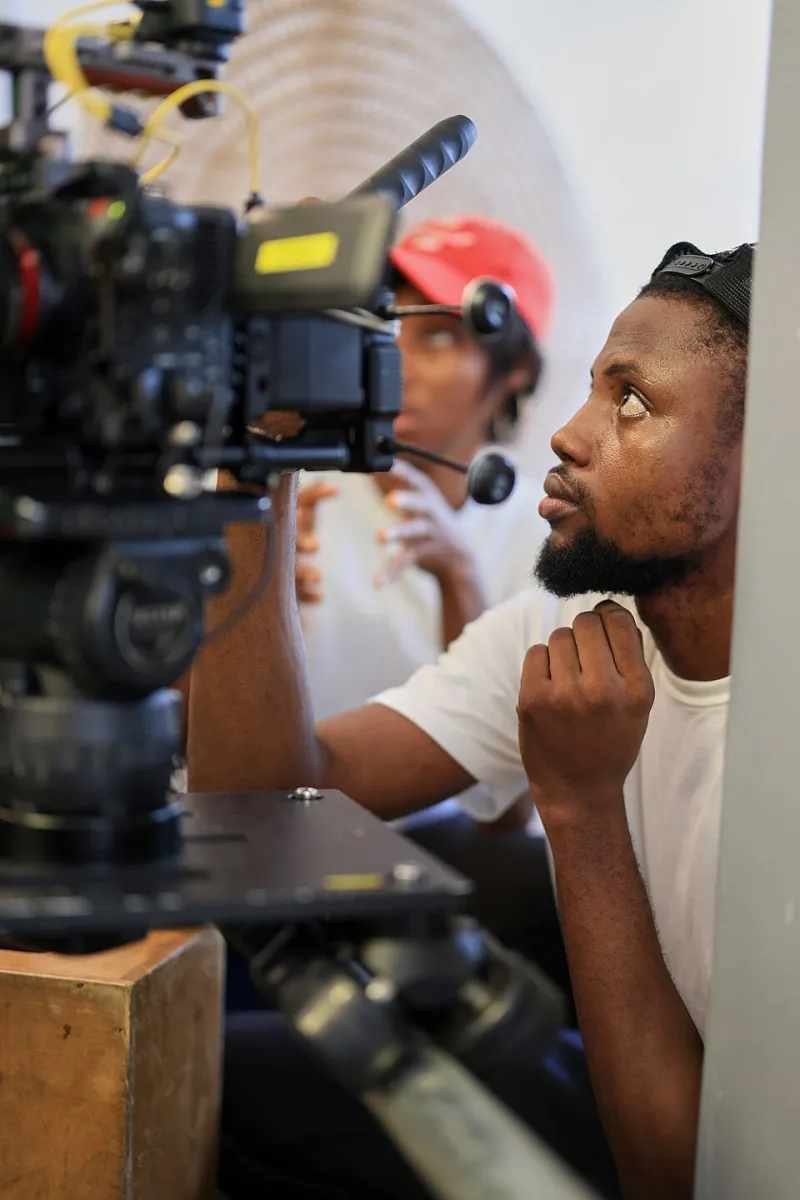
Library Cues, One Local Band, and a Single Needle Drop: Building a Score That Sounds Bigger Than Your Budget

Photo: Joanna Priestley, CC BY-SA 4.0, via Wikimedia Commons
There's a moment in every micro-budget edit where the temp track falls away and the film suddenly sounds like a student project. It's rarely the picture's fault. It's that the music was an afterthought — grabbed in an afternoon, licensed in a panic, dropped in at full volume over everything.
The good news: a convincing soundtrack is one of the few places where a small budget buys disproportionate returns. Two hundred dollars, spent deliberately, can sound like a lot more than two hundred dollars. Here's how that math actually works.
Start with the split, not with the songs
Before you listen to a single cue, decide where the money goes. A workable $200 split looks something like this:
- $80 to a local band for three or four original cues plus stems
- $60 to a library subscription for two months of browsing and downloads
- $35 to a single licensed track — the needle drop, if you're doing one
- $25 held back for the unglamorous stuff: re-recording a cue, a reverb plug-in, a festival print of the mix
That last line matters more than it looks. Every micro-budget music plan I've watched fall apart fell apart at the revision stage, when someone needed a stem they didn't ask for.
The fine print on library cues is the whole game
Royalty-free libraries are not a shortcut around licensing — they're a shortcut around negotiation. The license you're buying is usually a blanket sync and master for a defined set of uses, and the definitions are where films get bitten.
Things to check before you download anything:
- Media. A 'film festival license' is not an all-media license. If your plan involves a streaming premiere eight months after your festival run, that cheap tier probably doesn't cover it.
- Term. Perpetual beats one-year, every single time. A one-year license on a film that takes eighteen months to circulate is a problem you'll discover at the worst possible moment.
- Territory. Worldwide, or US-only? Worldwide costs little more and saves a headache if a festival in Ontario comes calling.
- Content ID. Ask whether the library whitelists your film. Otherwise your trailer gets claimed the day you post it.
- Cue sheets. You'll need them for any broadcaster or distributor. Libraries usually provide a template. Keep a running log from day one — title, composer, publisher, PRO affiliation, timing, usage.
That log is boring for about four months and then it is the most valuable document in your project folder.
Commissioning a local band without insulting them
Eighty dollars is not a fee; it's a gesture. So don't present it as a fee. Present it as a flat buyout for a defined scope, and make the scope small and clear: three cues, roughly 60 to 90 seconds each, delivered as mixed files and stems.
Stems are the whole point. With stems you can duck the drums under dialogue, strip a cue down to a single sustained note, or rebuild a theme for the end credits. Without them you're stuck choosing between 'too loud' and 'inaudible.'
A few practical notes from filmmakers who've done this well in 2026:
- Go see them play first. Approach after the set, not by cold email. Bring the logline written down.
- Ask for a mood, not a genre. 'Something like your slower stuff, but colder' gets you further than naming three influences.
- Offer a screening slot and a credit card-sized thanks. Local bands care about being seen supporting something. Put their name on the poster, invite them to the Q&A, let them sell merch in the lobby.
- Get it in writing, even if it's one page. Names, contact info, what's being delivered, the buyout, the credit line, and which uses are covered. Festival-only is fine — just say so, and agree in writing on what a distribution step would cost later.
The one needle drop rule
If you're spending real money on a recognizable track, spend it once and spend it where it does structural work: the opening titles, the big montage, or the final scene. A needle drop that shows up in the middle of act two for ninety seconds of vibes is a needle drop you'll regret at the licensing stage.
The rule I keep hearing from post supervisors: if you can cut the scene to a different song without changing the scene, you don't need the song. Save the money and put it into the mix.
Mix choices that read as expensive
Most of what makes a small film sound big happens after the music is chosen.
- Score less. Long stretches of room tone with a single held note beat wall-to-wall cues every time.
- Let diegetic sound carry the load. A refrigerator hum that swells into the score is free and it's more interesting than a generic pad.
- High-pass everything. Mud is the tell. Clean low end on dialogue, and the score suddenly has room to breathe.
- Mix dialogue to a consistent anchor. Wild swings in dialogue level are the single most common giveaway in micro-budget sound.
- Print a little room. A short reverb tail on the score, matched roughly to your locations, glues music and picture together.
- Deliver two mixes. A festival mix and a web mix. They are not the same file.
Three 2026 projects that turned limits into style
Gutter Ball, a feature shot in Akron, spent its entire music budget on one local four-piece and walked away with four cues and a full stem set. The band's slightly out-of-tune piano became the film's signature.
Marlene, 4 a.m., a shorts-program favorite, used a single $40 library subscription and leaned hard into room tone — the silence is doing the composing.
The Taft Street Tapes licensed exactly one song, for festival use only, and put every remaining dollar into a mono mix that makes the archival footage feel found rather than reconstructed.
None of these sound cheap. All of them sound like decisions.