Read It Out Loud Before You Shoot It: Staging a Public Table Read That Does Three Jobs at Once
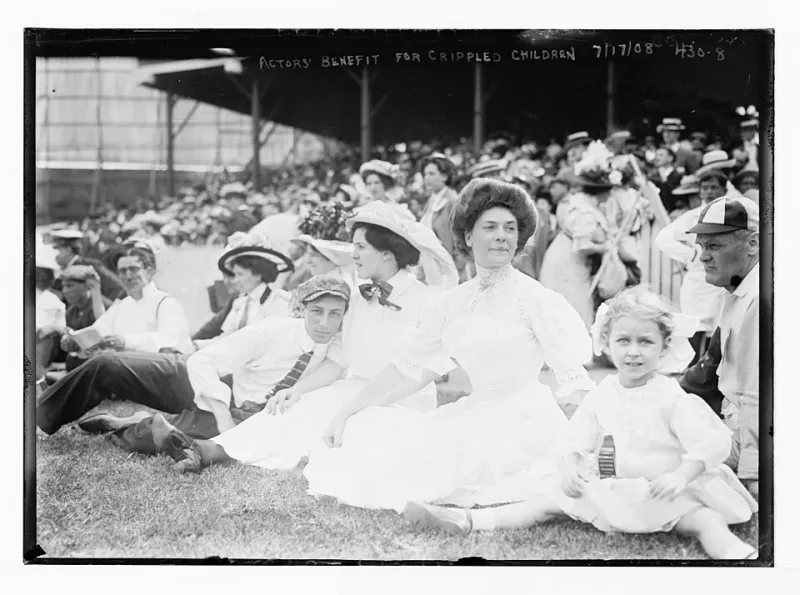
Photo: Bain News Service, publisher, Public domain, via Wikimedia Commons
There is a specific sound a script makes when it hits a room for the first time. Not the sound of actors performing it — the sound of thirty people breathing differently when a scene turns. You cannot get that from a laptop screen at 1 a.m. You can get it from a folding chair in a library meeting room on a Tuesday.
That is the pitch for the public table read: 15 to 20 pages of an unfinished script, four to six local actors, scripts in hand, no sets, no lights, no pressure. You are not staging a show. You are running a diagnostic in front of witnesses, and the witnesses are the point.
Why do it in public instead of in your living room
A private read tells you whether the dialogue is clunky. A public read tells you that, plus three things you actually need: who in your town can act, who in your town will show up, and who in your town will put money in a jar because they want to see the rest.
Casting, fundraising, and audience-building are usually three separate campaigns that each cost you a month. Compress them into one night. The room does the work — you just have to build the room correctly.
One caveat, and it is a real one: a public read is not a pitch meeting. Do not get up afterward and ask for money from the stage. Have a donation jar near the door, a QR code on the back of the program, and nothing else. People who liked the pages will find the jar. People who felt cornered will not.
What to pick out of the script
Do not read page one to page twenty. Read the best 15 to 20 continuous pages you have, and make sure they end on a turn — a reveal, a decision, a door opening. A read that ends flat teaches the audience to leave flat.
A few rules that save the night:
- One location if possible. Four locations in 18 pages means four sets of stage directions, and stage directions are dead air when read aloud.
- Cap the cast at six readers. More than six and half your room is on stage, which means half your room is not in the audience.
- Print clean pages. Fresh format, page numbers, character names in bold, no tracked changes, no scene notes in the margins. If a reader has to decipher a comment bubble, the illusion of a story collapses.
- Bring a narrator. One person reads the action lines and nothing else. Without it, the room loses geography.
Casting notices that actually work
Skip the general social post that says looking for actors. Be specific and go where the theater people already are: the community theater email list, the drama department at the nearest college, the local improv group, the film society's Facebook group, and the two people at your last screening who told you they used to do summer stock.
Write the notice in the shape of the roles:
Two-night table read of a 20-page excerpt, unpaid, coffee and pizza provided. Looking for: a woman, 40s-50s, dry, tired, funny without trying; a man, late teens, talks fast when he lies; a narrator who can read action lines without acting them.
That notice gets replies. A notice that says seeking talented actors for an exciting project does not.
The room, the seats, and the invite math
Book a space that holds about 20 percent more people than you expect. A library meeting room is free and comes with chairs, a table, and a door that closes. A bookshop is warmer but tighter. A taproom on a slow night is loud but comes with an audience already in the building, which is its own kind of gift.
Seating plan, kept simple:
- Readers at a long table facing the room, side by side, not hidden behind laptops.
- Front row reserved for nobody. Reserved rows read as a VIP section and make strangers feel like extras.
- Aisle seats kept open near the door so late arrivals do not climb over knees.
- A small table by the exit with the program, a signup sheet, and the jar.
Send the invite twelve days out, a reminder three days out, and a morning-of note with the address and the parking situation. That last message is worth more than any poster.
The feedback circle that does not become a critique session
This is where most public reads go wrong. You open the floor, someone who has never written anything tells you the third scene needs a car chase, and you spend twenty minutes defending a draft you already know needs work.
Instead, keep the floor closed during the read and open a short, structured circle afterward — fifteen minutes, no more. Hand out index cards before the read starts. Ask three questions, in this order:
- Where did you lose track of what was happening?
- Which character did you want to hear more from?
- What do you think happens next?
Question three is the one you actually came for. If the room's guesses are more interesting than your second act, you have a problem. If they are close to your second act, you have a movie.
Collect the cards. Do not read them on stage. Read them the next morning with coffee and a clear head, and count how often the same note appears. Three identical notes mean something. One note means that person has a different movie in their head.
The five-line host script
Someone has to run the night, and it should be you, briefly. Say this and sit down:
Thanks for coming out. This is a draft, not a movie — nobody memorized anything, so forgive the page turns. It runs about twenty minutes. When it ends, give the readers a hand, grab a card from the seat next to you, and I will ask three questions. There is coffee in the back and a jar by the door if you want to see this thing get made.
That is the whole program. No introduction of every cast member. No biography. No speech about your influences.
After the lights come up
Two chores before you leave the building. First, get contact info from everyone who walked in, not just the people who donated — a clipboard is fine, a QR code to a plain email form is better. Second, ask your readers, individually, whether they would want to do it again for a camera. Some will say yes politely; one or two will say yes with their whole face, and those are your casting decisions.
Then go home and rewrite the pages the room stumbled on. You got a free pass at a scene that has not cost you a shooting day yet. That is the cheapest development money in independent film, and it costs about forty dollars in coffee.